A chatbot is cheaper — until it approves the wrong refund.
E-commerce Support & Returns Copilot
Post-purchase tickets resolved by a deterministic return-policy engine. Large refunds wait for a human, enforced at the database.
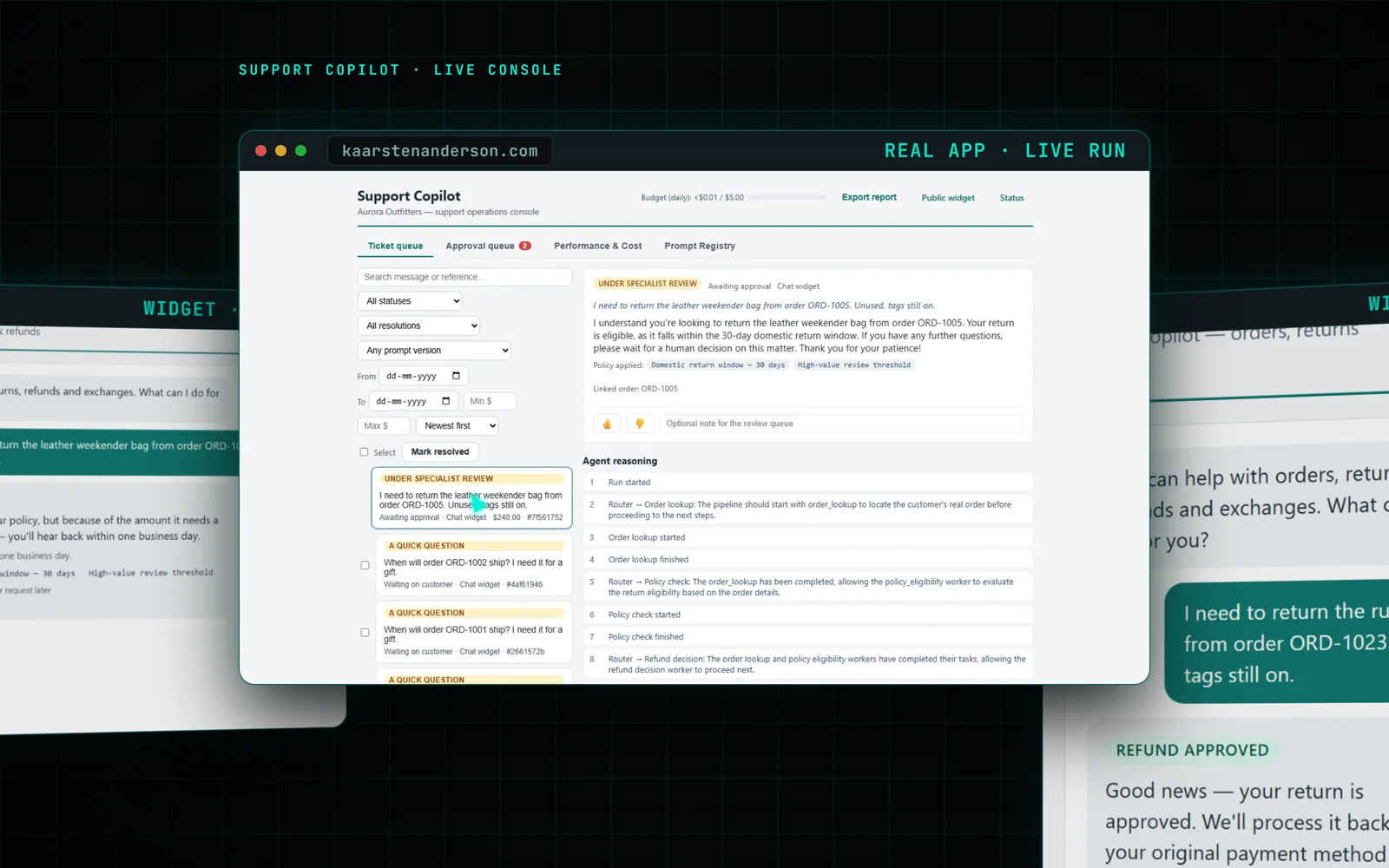
Support tickets are judgment work with money attached, and every refund must trace back to policy, not to what a model felt like saying.
until it approves the wrong refundA supervisor routes each ticket to specialist workers; a deterministic engine alone decides eligibility and amounts; anything above the cap is physically impossible to auto-approve.
How it works
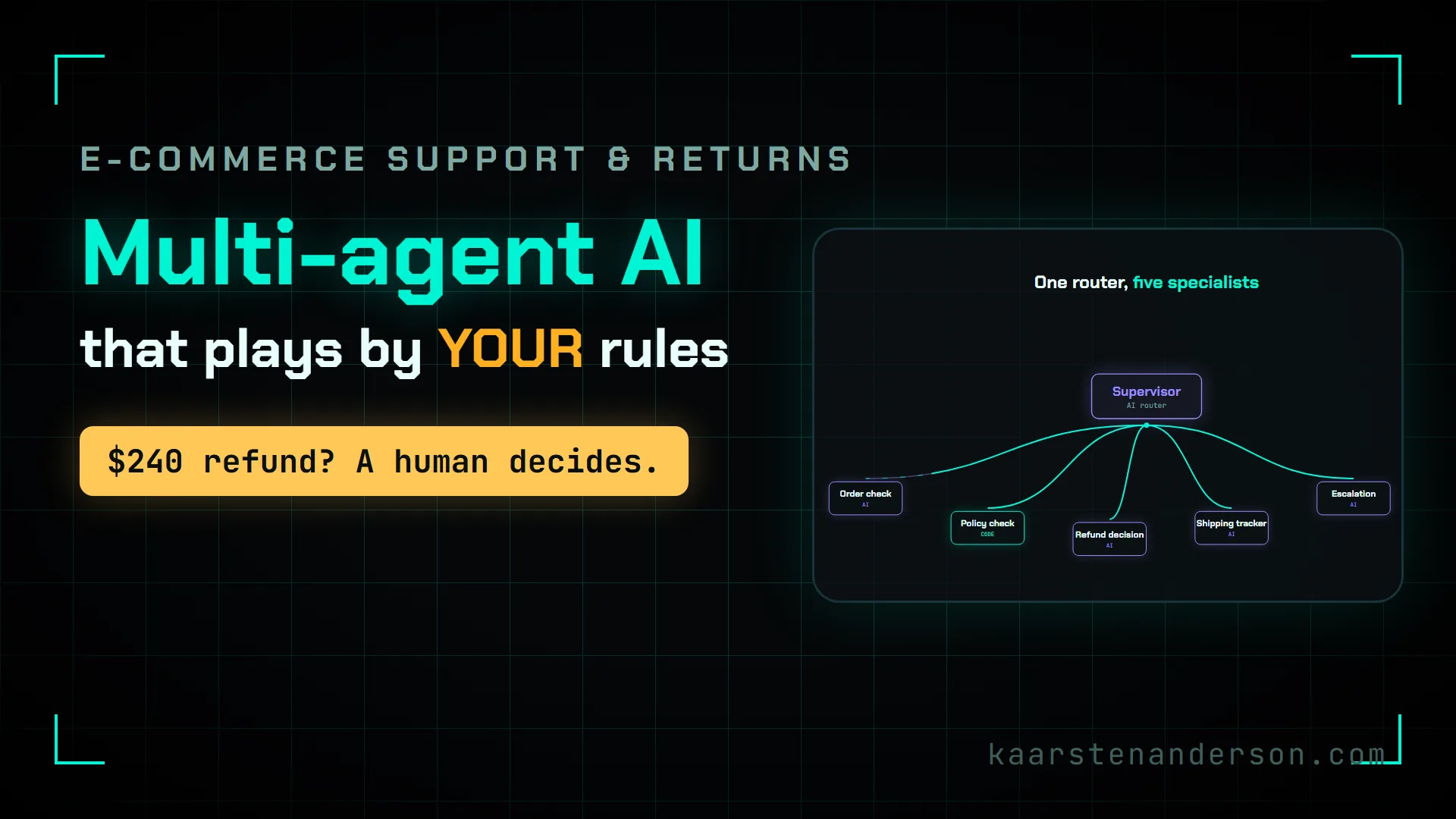
English subtitles burned in · Spanish CC on YouTube
Screened before any AI runs.
Every message is screened in code before any model sees it. All 22 attack techniques in the corpus were blocked; a bare prompt blocked none.
Policy engine — decides in code.
Return window, condition and item flags are checked in code against the verified order record. Same input, same decision, every time.
Over the cap? The database refuses.
Refunds above the cap can't be auto-approved: the system refuses the write, even if an agent tried. They wait for a person, with the policy check and the drafted reply side by side.
Duplicate refunds stopped at the source.
A second refund for the same item is rejected deterministically before anything is written. No prompt can talk its way past it.
A widget customers can use.
The public support widget handles empty, blocked and requires-approval states explicitly. White-label settings carry your store's name and colors.
Four in five resolved without a human.
The Performance and Cost tab turns resolved tickets into a dollar figure. On the scored dataset, 81% of tickets were resolved without escalation.
Architecture
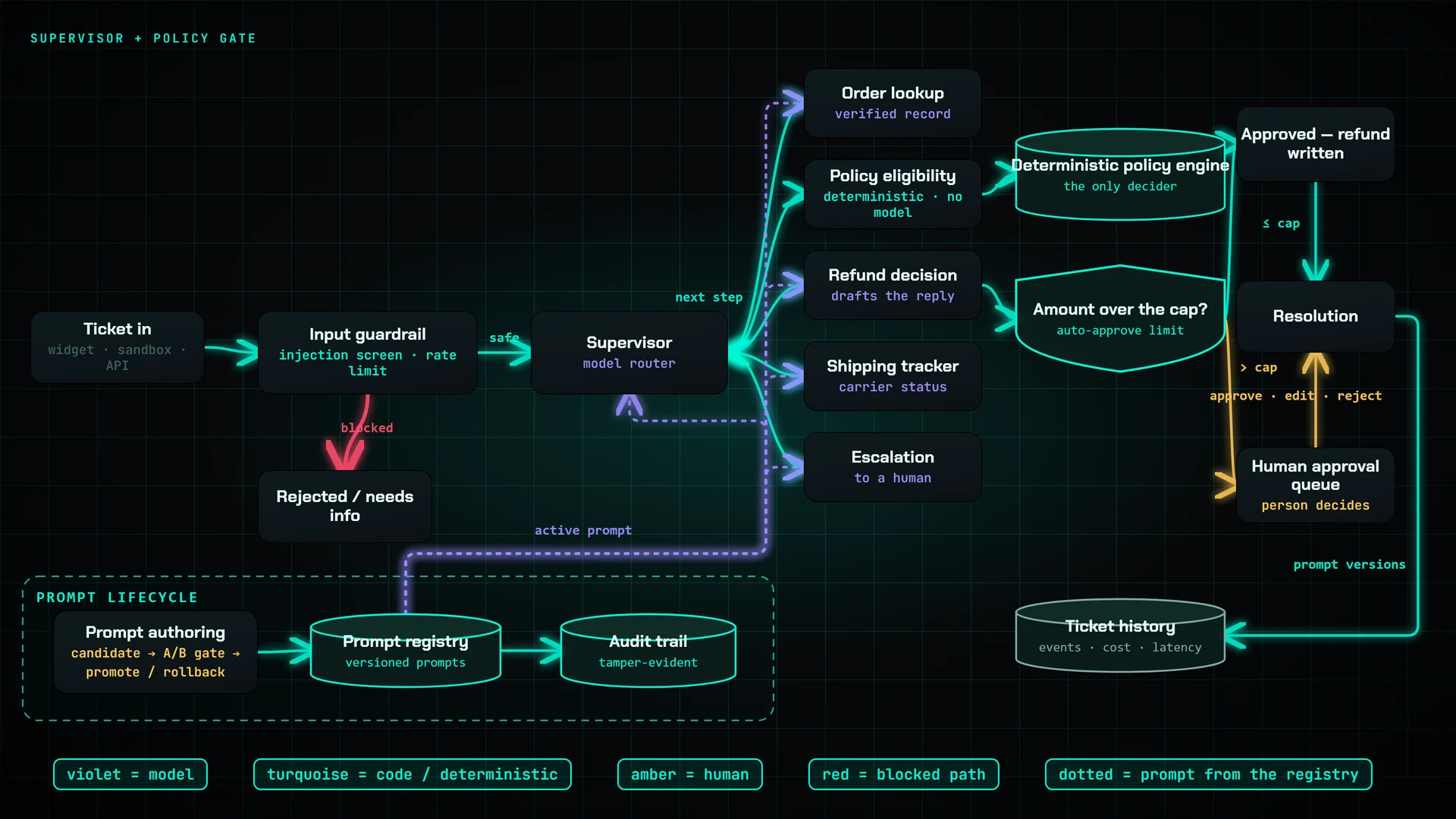
Text description of the diagram
A ticket arrives from the widget, the public sandbox or the API and passes the input guardrail (injection screen and rate limit). Blocked messages are rejected or sent back for more information; safe tickets reach the supervisor, a model router that dispatches specialist workers one step at a time — order lookup against the verified record, deterministic policy eligibility, refund decision drafting, shipping tracking and escalation — each returning to the supervisor. Eligibility and amounts come only from the deterministic policy engine; the model drafts the reply. If the refund amount is at or under the auto-approve cap, it is written and resolved; above the cap it waits in a human approval queue, and the human can approve, edit or reject before resolution. The supervisor and the four model workers each run the prompt version currently promoted in a prompt registry; policy eligibility has no prompt because it never calls a model. New prompt versions are authored in the console and only promoted after an A/B evaluation gate, with every promotion and rollback recorded in a tamper-evident audit trail. Each resolution is stored in the ticket history with the exact prompt versions that produced it.
Measured. Not claimed.
Pipeline vs a single bare prompt · live scorecard · 36 synthetic tickets · one run · 2026-10-14
And it's a real product.
Stack
Want this adapted to your store?
Private project. I connect it to your order system, tune the policy engine and refund cap to your rules, validate it on your own anonymized tickets before go-live, and scale it to your whole support team. Tell me about your setup.